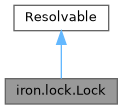
Inheritance diagram for iron.lock.Lock:
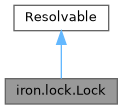
Collaboration diagram for iron.lock.Lock:
Public Member Functions | |
| __init__ (self, Tile tile, int|None lock_id=None, int init=0, str|None name=None) | |
| Tile | tile (self) |
| str | name (self) |
| op (self) | |
| None | resolve (self, ir.Location|None loc=None, ir.InsertionPoint|None ip=None) |
| None | acquire (self, int value=1) |
| None | acquire_exact (self, int value=1) |
| None | release (self, int value=1) |
Public Attributes | |
| op | |
Protected Attributes | |
| _tile | |
| _lock_id | |
| _init | |
| _name | |
| _op | |
Static Protected Attributes | |
| _glock_index = itertools.count() | |
Detailed Description
A named hardware lock on a specific tile.
Constructor & Destructor Documentation
◆ __init__()
| iron.lock.Lock.__init__ | ( | self, | |
| Tile | tile, | ||
| int | None | lock_id = None, |
||
| int | init = 0, |
||
| str | None | name = None |
||
| ) |
Construct a Lock.

Args:
    tile (Tile): The tile that owns this lock.
    lock_id (int | None): Hardware lock ID; passed straight through to
        the underlying ``aie.lock`` op.  If ``None`` (the default),
        the lowering pass picks one.
    init (int): Initial lock value at design startup.  Defaults to 0.
    name (str | None): Symbol name for the lock.  A unique name is
        generated if not provided.
Member Function Documentation
◆ acquire()
| None iron.lock.Lock.acquire | ( | self, | |
| int | value = 1 |
||
| ) |
Emit ``aie.use_lock(self, AcquireGreaterEqual, value=value)``.

The default ``AcquireGreaterEqual`` mode matches what almost every
ObjectFifo / DMA-driven design wants; use :meth:`acquire_exact` for
the rarer ``Acquire`` (exact-equality) mode.
◆ acquire_exact()
| None iron.lock.Lock.acquire_exact | ( | self, | |
| int | value = 1 |
||
| ) |
Emit ``aie.use_lock(self, Acquire, value=value)`` (exact match).
◆ name()
| str iron.lock.Lock.name | ( | self | ) |
◆ op()
| iron.lock.Lock.op | ( | self | ) |
◆ release()
| None iron.lock.Lock.release | ( | self, | |
| int | value = 1 |
||
| ) |
Emit ``aie.use_lock(self, Release, value=value)``.
◆ resolve()
| None iron.lock.Lock.resolve | ( | self, | |
| ir.Location | None | loc = None, |
||
| ir.InsertionPoint | None | ip = None |
||
| ) |
◆ tile()
| Tile iron.lock.Lock.tile | ( | self | ) |
Member Data Documentation
◆ _glock_index
|
staticprotected |
◆ _init
|
protected |
◆ _lock_id
|
protected |
◆ _name
|
protected |
◆ _op
|
protected |
◆ _tile
|
protected |
◆ op
| iron.lock.Lock.op |
The documentation for this class was generated from the following file:
- iron/lock.py