Single / Double Buffer
The design in single_buffer.py uses an ObjectFifo of_in to transfer the output of my_worker to my_worker2 and an ObjectFifo of_out to transfer the output of my_worker2 to external memory. of_in has a depth of 1 which describes a single buffer between the two Workers as shown in the figure below.
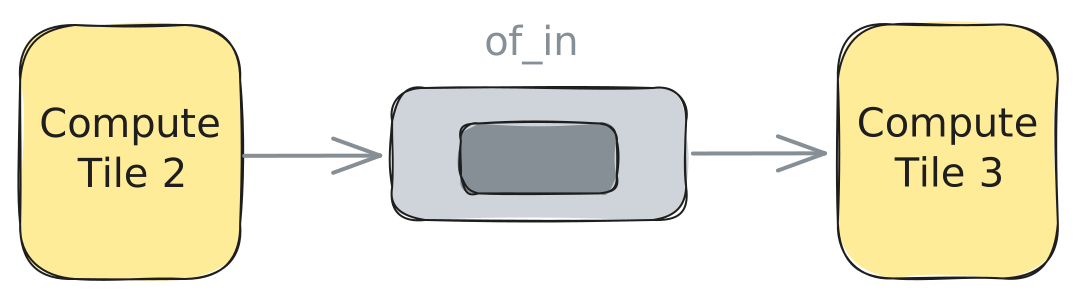
NOTE: The image above assumes that the Workers are already mapped to
ComputeTile2andComputeTile3. However, this is not the only possible mapping and when creating a Worker, its placement can be left to the compiler.
Both the producer and the consumer processes in this design have trivial tasks. The producer process running on my_worker acquires the single buffer and writes 1 into all its entries before releasing it for consumption. The consumer process running on my_worker2 acquires the single buffer from of_in as well as the single buffer from of_out, copies the data from the input ObjectFifo to the output ObjectFifo, and releases both objects for other processes.
To have this design use a double, or ping-pong, buffer for the data transfer instead, the user need only set the depth of the ObjectFifos to 2. No other change is required as the ObjectFifo lowering will take care of properly cycling between the ping and pong buffers. To change the depth the user should write:
of_in = ObjectFifo(data_ty, name="in", depth=2) # double buffer
of_out = ObjectFifo(data_ty, name="out", depth=2) # double buffer
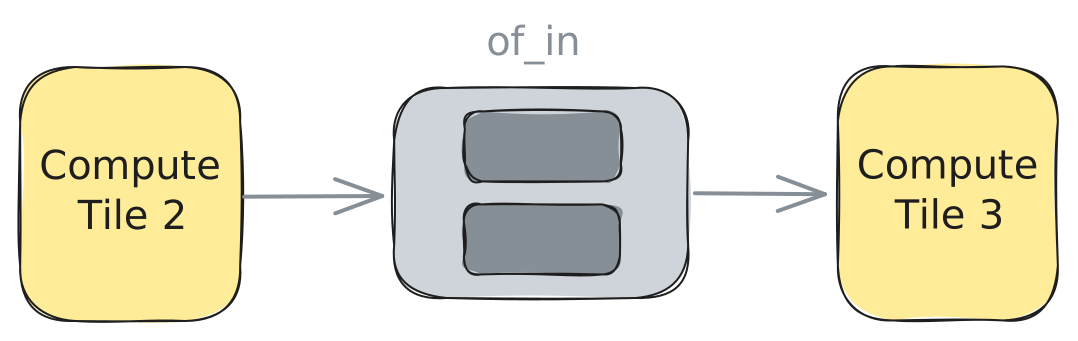
All examples available in the programming_examples contain this data movement pattern.
The design is wrapped in @iron.jit, so a single command JIT-compiles and runs it on the attached NPU: